
How Modern Restorations Mimic Natural Teeth
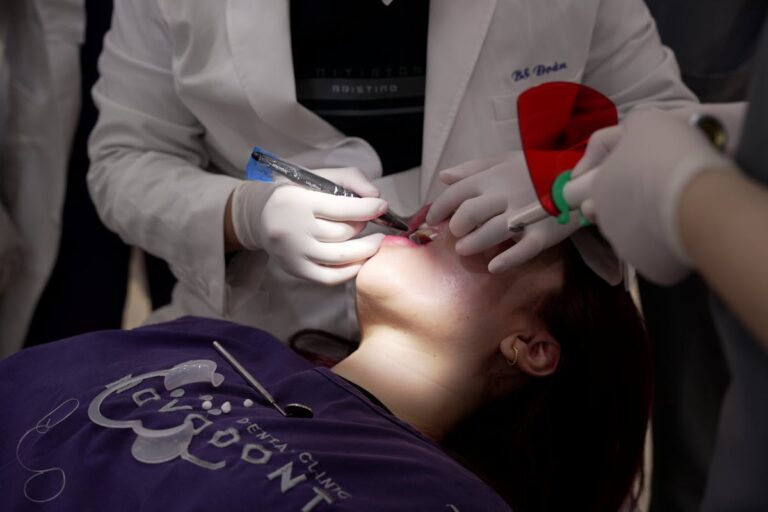
Modern dental restorations have evolved considerably to replicate the appearance and function of natural teeth. Advances in material science now allow for the creation of restorations that closely match the mechanical properties, translucency, and surface texture of enamel and dentin. Additionally, digital technologies enable precise customization of shape and color, enhancing integration with surrounding dentition. Understanding these developments is essential to appreciating how contemporary techniques achieve both aesthetic and functional harmony.
Advances in Dental Material Technology
Advancements in dental material technology have considerably enhanced the efficacy and durability of natural tooth restorations. Recent developments in biomimetic materials have allowed restorations to closely replicate the mechanical properties and esthetic qualities of natural dentition. These materials exhibit improved elasticity and wear resistance, reducing the risk of restoration failure and secondary caries. Composite advancements have further contributed to this progress by increasing filler particle integration and optimizing resin matrices, which result in superior bonding strength and color stability. Together, these innovations enable minimally invasive techniques that preserve tooth structure while delivering restorations with enhanced longevity and functional performance. The integration of biomimetic principles into composite formulations represents a significant leap forward in restorative dentistry, establishing new standards for mimicking natural tooth behavior under physiological conditions.
The Role of Digital Imaging in Restoration Design
Digital imaging technologies have become integral to the design and fabrication of natural tooth restorations. Utilizing advanced imaging technology, clinicians capture highly accurate three-dimensional representations of the dentition and surrounding oral structures. These digital scans provide precise anatomical data essential for digital design workflows, enabling the creation of restorations that closely replicate natural morphology and occlusion. The integration of digital design software allows for the manipulation and refinement of restoration geometry in a virtual environment, enhancing fit and function while minimizing manual adjustments. In addition, imaging technology facilitates seamless communication between dental professionals and laboratory technicians, streamlining the production process. Overall, the use of digital imaging in restoration design greatly increases accuracy, efficiency, and predictability, contributing to restorations that harmonize with the patient’s natural dentition.
Custom Shade Matching Techniques
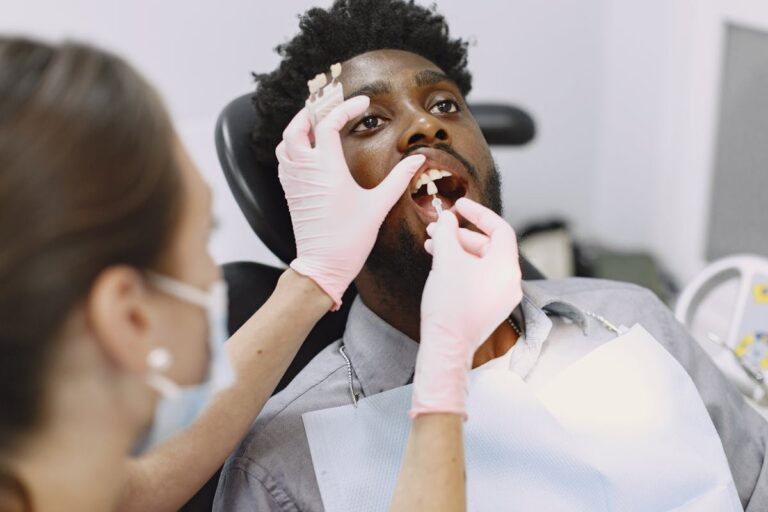
Although accurate restoration design is essential, achieving an ideal aesthetic result depends heavily on precise shade matching. Custom shade matching techniques utilize advanced protocols to select hues that replicate the natural tooth’s translucency, chroma, and value. Shade selection involves using standardized shade guides combined with spectrophotometric devices to quantify color parameters objectively. These tools minimize subjective variability in color matching, ensuring consistent results across different lighting conditions. Additionally, digital imaging aids in capturing subtle color gradients, enabling technicians to fabricate restorations with seamless integration into the patient’s dentition. The integration of these methods enhances color matching accuracy by addressing individual variations in enamel and dentin properties. Ultimately, custom shade matching is critical to producing restorations that are indistinguishable from natural teeth in both appearance and optical behavior.
3D Printing and Precision in Dental Restorations
Advancements in digital scanning have greatly enhanced the accuracy of dental impressions, enabling detailed capture of oral structures. Concurrently, material innovations compatible with 3D printing technologies facilitate the production of restorations that combine strength with biocompatibility. These developments allow for custom-fit designs that improve restoration longevity and patient comfort.
Digital Scanning Accuracy
How does scanning technology influence the fidelity of dental restorations? Digital impressioning benefits greatly enhance the accuracy and efficiency of capturing oral anatomy. Scanning technology advancements enable precise digital models that directly impact restoration fit and function. Key factors contributing to digital scanning accuracy include:
- Resolution and precision of intraoral scanners, which capture detailed surface morphology essential for natural tooth replication.
- Real-time data acquisition minimizing errors associated with traditional impressions, thereby improving restoration marginal adaptation.
- Software algorithms facilitating error correction and seamless integration with CAD/CAM systems, ensuring dimensional fidelity.
These elements collectively reduce fabrication discrepancies and improve patient outcomes by producing restorations that closely mimic natural teeth in both form and function. Consequently, digital scanning accuracy is foundational to modern restorative dentistry’s pursuit of precision and predictability.
Material Innovations
When combined with digital scanning, material innovations such as 3D printing have revolutionized the fabrication of dental restorations by enabling unparalleled precision and customization. Advanced 3D printing techniques facilitate the accurate layering of ceramic composites, which closely replicate the optical and mechanical properties of natural enamel and dentin. These materials exhibit enhanced biocompatibility and wear resistance, critical for long-term clinical success. Additionally, the integration of improved resin bonding agents guarantees robust adhesion between the restoration and tooth substrate, minimizing microleakage and enhancing durability. The precision of additive manufacturing allows for consistent control over restoration morphology and surface texture, optimizing functional and aesthetic outcomes. Together, these material advancements contribute greatly to producing restorations that closely mimic natural teeth in both appearance and performance.
Custom Fit Design
Custom fit design in dental restorations leverages digital technology to achieve exact anatomical conformity between prosthetic components and the patient’s dentition. This process begins with capturing highly accurate customized impressions, enabling precise replication of oral structures. Subsequently, 3D printing facilitates the creation of restorations with micron-level accuracy, guaranteeing seamless integration. Key aspects include:
- Capturing detailed intraoral scans for exact morphological data.
- Utilizing CAD/CAM software to design restorations accommodating individual occlusal and spatial relationships.
- Implementing ergonomic adjustments to optimize fit, function, and patient comfort.
The integration of these technologies minimizes errors inherent in traditional methods, reduces chair time, and enhances long-term durability. Ultimately, custom fit design assures that dental restorations not only replicate natural tooth anatomy but also deliver superior functional and aesthetic outcomes.
Replicating Natural Tooth Texture and Translucency
Replicating natural tooth texture requires precise surface engraving and microstructural detailing to mimic enamel morphology. Achieving accurate translucency involves controlled modulation of material opacity and refractive indices. Layering composite resins or ceramics with varied optical properties creates depth, enhancing the restoration’s lifelike appearance.
Surface Texture Techniques
Numerous surface texture techniques are employed to closely mimic the intricate microstructure and translucency of natural teeth. These surface treatments focus on texture replication to achieve a lifelike finish. Key methods include:
- Microscopic Etching: Controlled acid or laser etching creates micro-roughness, replicating the enamel’s natural surface irregularities.
- Layered Polishing: Sequential polishing with varying abrasives refines texture, enhancing the tactile and visual realism.
- Custom Stippling and Grooving: Hand-applied or machine-assisted stippling simulates perikymata and subtle grooves typical of natural tooth anatomy.
These techniques are carefully integrated to reproduce the nuanced surface topography, critical for both aesthetic integration and functional performance in dental restorations. The precise control over surface treatments guarantees restorations exhibit authentic texture without compromising material integrity.
Achieving Natural Translucency
Although natural translucency arises from complex interactions within dental tissues, modern restorative techniques employ advanced layering and material selection to emulate this optical property accurately. The use of translucent materials, such as lithium disilicate and zirconia with controlled opacity, allows light to penetrate and scatter similarly to enamel. Precise calibration of refractive indices between restorative layers minimizes light distortion, enhancing lifelike appearance. Surface treatments further influence translucency by modulating light reflection and diffusion. This meticulous approach guarantees restorations replicate the subtle gradations of translucency found in natural teeth, contributing greatly to natural aesthetics. By integrating these principles, clinicians achieve restorations that harmonize visually with adjacent dentition, maintaining optical continuity and depth without compromising structural integrity or color stability.
Layering Materials for Depth
Multiple layers of carefully selected restorative materials are essential to recreate the depth and texture characteristic of natural teeth. Layering techniques enable clinicians to achieve a nuanced replication of enamel and dentin properties, enhancing aesthetic depth. The process involves:
- Opaque dentin base application – mimics the underlying dentin’s hue and opacity, providing foundational color.
- Translucent enamel layering – recreates enamel’s natural translucency, allowing light transmission and depth perception.
- Surface characterization – incorporates stains and surface textures to replicate natural tooth morphology and optical effects.
This stratified approach allows for precise control over optical properties, ensuring restorations blend seamlessly with adjacent dentition. By employing these layering techniques, dental restorations achieve superior visual integration, improved light diffusion, and lifelike texture, thereby elevating the overall aesthetic outcome.
Importance of Biocompatible Materials
Because restorative materials directly interact with biological tissues, their biocompatibility is critical to guarantee long-term success and patient safety. Biocompatible benefits include minimizing inflammatory responses, preventing cytotoxicity, and reducing hypersensitivity reactions. Selecting materials with proven material safety profiles is essential to avoid adverse tissue interactions that could compromise restoration longevity. Modern restorative materials are engineered to exhibit chemical stability, low solubility, and inert behavior within the oral environment, thereby maintaining tissue integrity. Additionally, biocompatible materials support ideal integration with surrounding structures, promoting healing and reducing postoperative complications. Ultimately, ensuring material safety through rigorous testing and adherence to regulatory standards underpins the clinical reliability of restorations and enhances patient outcomes by preserving oral health alongside esthetic considerations.
Enhancing Functionality With Modern Restorations
Modern restorative techniques actively enhance the functional performance of natural teeth by optimizing occlusal dynamics, structural integrity, and masticatory efficiency. These advancements guarantee restorations not only replicate the appearance but also the biomechanical behavior of natural dentition, improving functional aesthetics and restoration longevity. Key factors include:
- Precise occlusal adjustment to distribute masticatory forces evenly, preventing premature wear and damage.
- Utilization of high-strength, biocompatible materials that mimic enamel and dentin properties, enhancing durability and load resistance.
- Integration of digital design and manufacturing technologies to achieve anatomically accurate contours, promoting efficient chewing and patient comfort.
Collectively, these improvements extend the lifespan of restorations while maintaining the natural functionality essential to oral health.
Patient Benefits of Lifelike Dental Restorations
When lifelike dental restorations closely replicate the natural anatomy and biomechanics of teeth, patients experience significant improvements in oral comfort, aesthetics, and overall oral health. Enhanced patient comfort arises from restorations that distribute occlusal forces effectively, minimizing tissue irritation and promoting functional harmony. Precise replication of natural tooth morphology contributes to ideal phonetics and mastication efficiency. In addition, aesthetic satisfaction is markedly increased due to the restorations’ ability to mimic natural translucency, color gradients, and surface texture, resulting in seamless integration with adjacent dentition. These factors collectively reduce the risk of secondary complications, such as periodontal issues or restoration failure. Consequently, lifelike restorations not only restore function but also elevate patient confidence and satisfaction, underscoring their pivotal role in contemporary restorative dentistry.
Frequently Asked Questions
How Long Do Modern Dental Restorations Typically Last?
Modern dental restorations typically last between 10 to 15 years, depending on restoration longevity factors such as material durability, oral hygiene, and functional load. Advanced materials like ceramics and composites enhance lifespan by resisting wear and fracture.
Are Modern Restorations Covered by Dental Insurance?
Modern dental restorations are often partially covered by dental insurance policies, though coverage limitations vary considerably. Patients should review specific policy details to understand eligible procedures, reimbursement rates, and any applicable deductibles or annual maximums before treatment.
What Is the Average Cost of a Lifelike Dental Restoration?
The average cost of a lifelike dental restoration ranges from $800 to $2,500, depending on material options such as porcelain or zirconia. Cost comparison reveals higher durability materials typically incur increased expenses.
Can Restorations Be Repaired if Damaged?
Restorations can be repaired if damaged using advanced restoration techniques. Repair options depend on the material and extent of damage, ranging from minor surface refinishing to partial replacement, ensuring structural integrity and aesthetic continuity.
How Do Restorations Affect Oral Hygiene Routines?
Restorations necessitate meticulous restoration maintenance to prevent plaque accumulation and decay. Oral hygiene routines must adapt, incorporating gentle brushing and flossing around restorations, ensuring integrity preservation and minimizing risks of periodontal complications or secondary caries development.