Can Invisalign Fix Bite Issues or Just Crooked Teeth?
Invisalign is widely recognized for correcting misaligned teeth, but its capacity to address bite issues warrants closer examination. Bite problems, including overbites, underbites, and crossbites, involve complex dental and skeletal relationships that may challenge the capabilities of clear aligners. Understanding how Invisalign functions in these contexts is essential for evaluating its suitability compared to traditional orthodontic methods. This discussion explores the scope and limitations of Invisalign in managing various bite irregularities.
Understanding Different Types of Bite Issues
How do various bite issues impact dental alignment and function? Bite classification is essential in orthodontic evaluation to identify malocclusions affecting occlusion and jaw mechanics. Common bite types include Class I, where molar relationships are normal but minor misalignments may exist; Class II, characterized by maxillary protrusion or mandibular retrusion leading to an overbite; and Class III, involving mandibular protrusion causing an underbite. Each classification presents specific challenges for dental function, including compromised mastication, speech difficulties, and increased wear on teeth. Accurate diagnosis through orthodontic evaluation allows for targeted treatment planning. Understanding these bite classifications is vital for evaluating the severity and complexity of bite issues, enabling clinicians to determine appropriate interventions beyond mere tooth alignment correction.
How Invisalign Works to Align Teeth
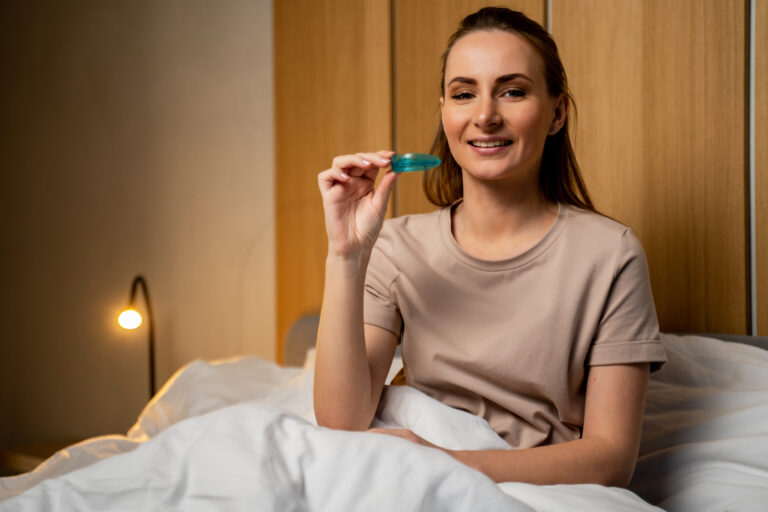
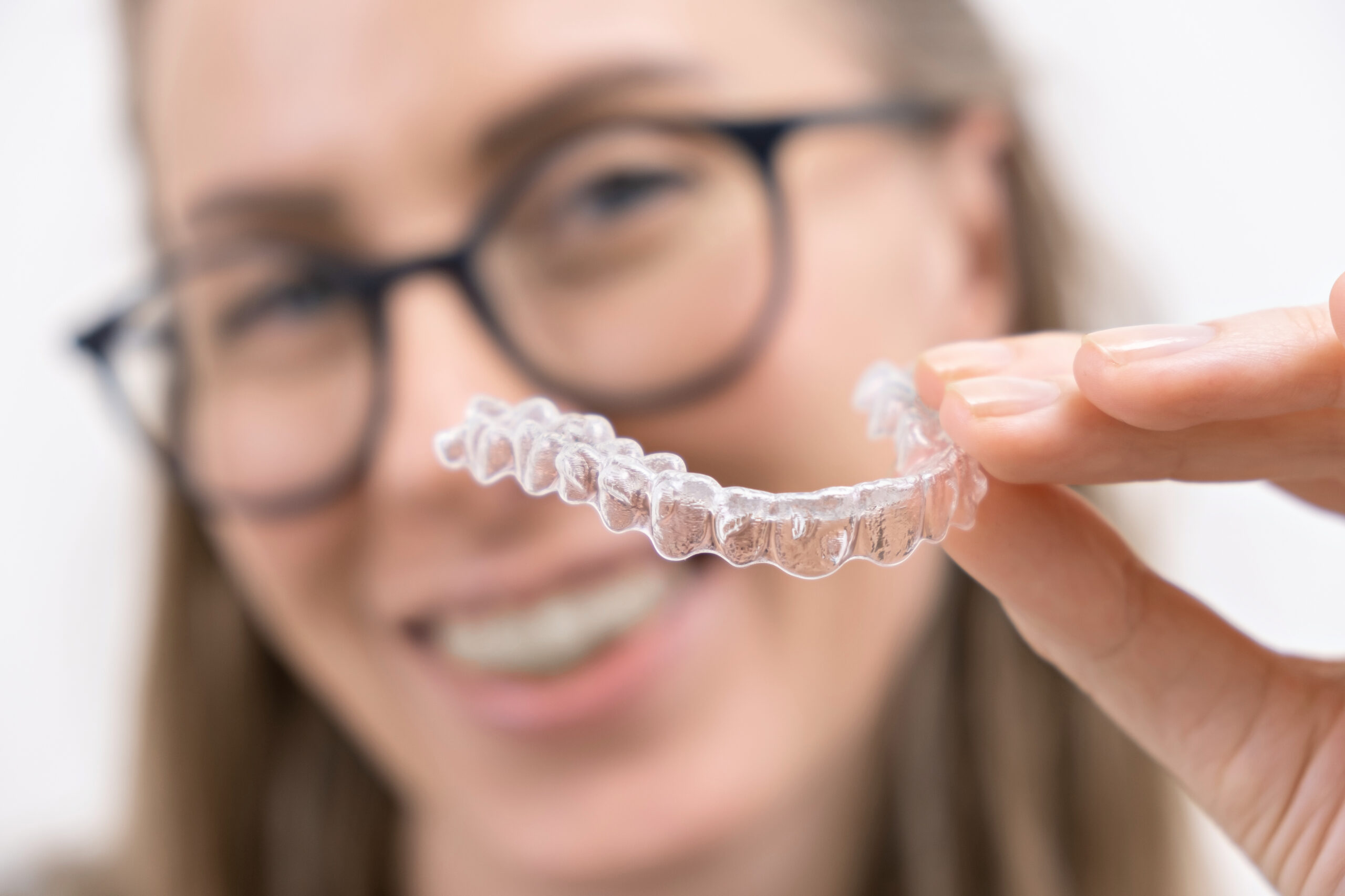
Invisalign utilizes a series of custom-fitted clear aligners designed to apply controlled forces to teeth. Each aligner gradually shifts teeth into the desired position through incremental adjustments. This method facilitates precise tooth movement while maintaining patient comfort and aesthetics.
Clear Aligner Mechanism
By what mechanism do clear aligners effectuate the gradual repositioning of teeth? Clear aligners apply controlled, continuous forces to teeth, guiding them into predetermined positions. Fabricated from medical-grade thermoplastic materials, these aligners fit snugly over dental arches, ensuring ideal contact and efficient force distribution. The clear aligner benefits include precise customization based on 3D digital scans, allowing incremental adjustments that minimize discomfort. Aligner comfort is enhanced by smooth edges and biocompatible surfaces, reducing oral irritation. Each successive aligner in the treatment sequence exerts slightly altered pressure points, facilitating targeted tooth movement while maintaining periodontal health. This biomechanical approach leverages the viscoelastic properties of periodontal ligaments, enabling effective remodeling of alveolar bone without invasive procedures, thereby offering a minimally intrusive orthodontic solution.
Gradual Tooth Movement
The application of controlled, continuous forces through successive clear aligners initiates a biological response within the periodontal ligament and surrounding alveolar bone. This response facilitates remodeling processes that allow for gradual adjustments in tooth position. Invisalign aligners are custom-fabricated to apply specific directional forces to targeted teeth, promoting precise tooth alignment over time. Each aligner in the series is designed to achieve incremental movements, typically ranging from 0.25 to 0.33 millimeters per stage, ensuring biomechanical efficiency and minimizing tissue strain. The sequential use of these aligners results in a cumulative effect, progressively correcting malocclusions and bite discrepancies. This methodical approach enables accurate control over tooth trajectory, optimizing treatment outcomes while maintaining patient comfort and oral health throughout the orthodontic intervention.
Invisalign’s Effectiveness on Overbites
Invisalign demonstrates measurable effectiveness in correcting mild to moderate overbites by applying controlled forces to reposition teeth and adjust jaw alignment. Treatment duration for overbite correction typically ranges from several months to over a year, depending on the severity and patient compliance. Clinical outcomes indicate that Invisalign can achieve functional and aesthetic improvements comparable to traditional orthodontic methods in appropriate cases.
Overbite Correction Potential
How effective is clear aligner therapy in addressing overbite malocclusions? Invisalign demonstrates measurable efficacy in correcting mild to moderate overbites by incrementally repositioning teeth and adjusting occlusal relationships. Overbite causes often include dental misalignment and skeletal discrepancies; Invisalign primarily addresses dental factors. Overbite symptoms such as excessive vertical overlap and associated wear can be mitigated through controlled tooth movements facilitated by customized aligner trays. However, severe overbites rooted in skeletal abnormalities may require adjunctive orthodontic or surgical intervention, as aligners alone lack the capacity for significant skeletal modification. Clinical outcomes depend on case complexity and patient compliance. Consequently, Invisalign offers a viable option for overbite correction within defined parameters, emphasizing precise treatment planning and realistic expectation setting based on etiological factors and symptomatology.
Treatment Duration Expectations
Treatment duration for correcting overbites with clear aligner therapy typically ranges from several months to over a year, contingent upon the severity of the malocclusion and patient adherence to prescribed wear schedules. Mild to moderate overbites often require shorter treatment duration, whereas severe skeletal discrepancies may extend the timeline or necessitate adjunctive interventions. Consistent patient compliance—wearing aligners 20-22 hours daily—is critical to achieving predictable tooth movement within estimated time frames. Noncompliance can result in prolonged treatment duration or suboptimal outcomes. Treatment plans are customized using digital modeling, allowing clinicians to monitor progress and adjust protocols accordingly. Overall, Invisalign’s effectiveness on overbites hinges on accurate case selection and stringent patient compliance to prescribed wear, directly influencing the efficiency and success of the overbite correction within the anticipated treatment duration.
Treating Underbites With Invisalign
An underbite, characterized by the lower teeth extending beyond the upper teeth, presents unique orthodontic challenges that require carefully controlled tooth movement. Invisalign offers specific advantages in treating underbites, primarily through precise aligner adjustments that guide the lower arch posteriorly while advancing the upper teeth. Bite correction with Invisalign involves a biomechanical approach that may include attachments, elastics, or interproximal reduction, tailored to each case. Treatment expectations must be realistic, as severe skeletal underbites often require adjunctive procedures beyond aligners alone. Patient experiences generally report improved comfort and aesthetics during treatment compared to traditional braces. Key considerations include:
- Customized treatment planning leveraging Invisalign’s digital modeling
- Incremental tooth movement optimizing occlusal alignment
- Monitoring progress to adjust force application for effective bite correction
Managing Crossbites Using Clear Aligners
While underbites require targeted posterior and anterior tooth movements, crossbites present distinct biomechanical challenges involving transverse discrepancies between the upper and lower arches. Effective crossbite management with clear aligner options centers on achieving lateral expansion of the maxillary arch and selective tooth movements to correct occlusal interferences. Clear aligners can incorporate precision cuts, attachments, and elastics to facilitate transverse correction by exerting controlled forces that guide tooth tipping and bodily movement. Additionally, staged aligner sequences allow progressive arch widening, minimizing periodontal stress. However, successful crossbite correction depends on accurate digital treatment planning and patient compliance. Clear aligner options provide a less invasive alternative to fixed appliances, offering enhanced aesthetics and comfort while addressing mild to moderate transverse discrepancies inherent in crossbite cases.
Limitations of Invisalign in Bite Correction
Several inherent constraints limit Invisalign’s effectiveness in thorough bite correction, particularly in complex malocclusions requiring significant vertical or sagittal adjustments. Invisalign limitations arise primarily from its reliance on removable aligners, which may inadequately control tooth movement compared to fixed appliances. Specific challenges include:
- Limited capacity to intrude or extrude posterior teeth effectively, complicating vertical bite correction.
- Difficulty addressing severe skeletal discrepancies or large overbites/underbites without adjunctive procedures.
- Reduced efficacy in achieving precise root torque and bodily tooth movements necessary for ideal occlusion.
These factors restrict Invisalign’s scope in extensive bite correction, making it less suitable for patients with pronounced malocclusions. While effective for mild to moderate cases, clinicians must consider these limitations when planning treatment to guarantee ideal functional and aesthetic outcomes.
Comparing Invisalign With Traditional Braces for Bite Problems
Although both Invisalign and traditional braces aim to correct bite problems, their mechanisms and effectiveness differ considerably. Invisalign advantages include superior patient comfort and enhanced aesthetic appeal due to its clear, removable aligners. In contrast, traditional braces utilize fixed metal brackets and wires, offering robust force application ideal for complex bite corrections. Braces comparison reveals that treatment costs vary; Invisalign often incurs higher expenses due to advanced technology and customization options. However, traditional braces may require additional visits for adjustments, influencing overall cost and duration. Customization options in Invisalign involve digitally planned aligners tailored to individual anatomy, whereas braces adjustments rely on manual orthodontist interventions. Ultimately, the choice impacts patient experience, with Invisalign favoring comfort and aesthetics, while traditional braces provide effective solutions for severe bite irregularities.
Factors to Consider When Choosing Invisalign for Bite Issues
Three primary factors influence the suitability of Invisalign for addressing bite issues: the severity of the malocclusion, patient compliance, and the specific biomechanical requirements for correction. Determining Invisalign candidacy requires thorough clinical evaluation to assess whether clear aligners can effectively manage the complexity of bite misalignment. Additionally, treatment costs must be considered, as more severe cases may necessitate adjunctive procedures or extended treatment duration, impacting overall expense. Key considerations include:
- Severity of Malocclusion: Complex bite problems may exceed Invisalign’s mechanical capabilities.
- Patient Compliance: Success depends on consistent aligner wear, typically 20–22 hours daily.
- Biomechanical Requirements: Specific tooth movements needed for bite correction may require attachments or auxiliary devices.
These factors collectively guide clinicians in recommending Invisalign as a viable option for bite correction.
Frequently Asked Questions
How Long Does Invisalign Treatment Typically Take for Bite Correction?
Invisalign treatment duration for bite alignment typically ranges from 12 to 18 months, depending on the severity of the malocclusion and patient compliance. Complex cases may require extended treatment or adjunctive orthodontic interventions.
Is Invisalign Treatment Painful Compared to Traditional Braces?
Invisalign discomfort is generally less intense and shorter in duration compared to traditional braces. The clear aligners exert gentler, more controlled forces, reducing soft tissue irritation and overall pain experienced during orthodontic treatment.
Can Adults With Severe Bite Issues Benefit From Invisalign?
Adults with severe bite issues may benefit from Invisalign; however, its effectiveness in adult orthodontics depends on case complexity. Invisalign can address mild to moderate malocclusions, but severe bite corrections often require adjunctive treatments or alternative methods.
How Often Do Invisalign Aligners Need to Be Replaced During Treatment?
Invisalign aligner replacement frequency typically occurs every one to two weeks, depending on treatment complexity and orthodontist recommendations. Treatment progress tracking guarantees timely shifts, optimizing tooth movement and addressing any necessary adjustments throughout the orthodontic process.
Are There Any Dietary Restrictions While Wearing Invisalign?
Dietary guidelines for Invisalign users emphasize removing aligners during meals to maintain hygiene and prevent damage. Food choices are unrestricted when aligners are out, but avoiding sugary or acidic drinks is advised to protect oral health during treatment.