What Makes a Smile Look “Fake” — and How Modern Dentistry Avoids It
A smile that appears insincere often reveals subtle inconsistencies—such as uneven lip movement, excessive gum exposure, or unnaturally uniform teeth—that disrupt its authenticity. Modern dentistry recognizes these nuances and employs sophisticated techniques to replicate natural dental aesthetics. Understanding how these factors interplay is essential for appreciating the advances that help create genuinely authentic smiles. Exploring these elements reveals why some smiles feel genuine while others fall short.
Key Characteristics of a Natural Smile
Although smiles vary widely among individuals, certain key characteristics consistently define a natural smile. A natural smile typically involves the coordinated activation of multiple facial muscles, prominently the zygomatic major, which lifts the corners of the mouth, and the orbicularis oculi, causing subtle eye crinkling. This interplay fosters smile authenticity, signaling genuine positive emotion. Moreover, the symmetry and smooth shift of facial expressions contribute to a natural appearance. Genuine smiles also display consistent muscle engagement over time, unlike fleeting or forced expressions. The teeth and gums visible during a natural smile tend to appear balanced and harmonious with overall facial features. Understanding these elements is essential for evaluating smile authenticity and serves as a foundation in modern dentistry to recreate natural, believable smiles.
Common Signs That Make a Smile Look Fake
How can one distinguish a genuine smile from a contrived one? Common signs that compromise smile authenticity include asymmetrical lip movement, lack of engagement of the orbicularis oculi muscles around the eyes, and overly uniform teeth that create dental illusions. These illusions often arise when dental work prioritizes symmetry and brightness at the expense of natural variation, resulting in an artificial appearance. Additionally, smiles that reveal teeth without corresponding muscle dynamics or fail to reflect the individual’s emotional state tend to appear forced. Recognizing these subtle cues allows dental professionals to avoid creating smiles that feel staged. Modern dentistry increasingly focuses on balancing aesthetic enhancements with preserving natural expressions, thereby enhancing smile authenticity while minimizing the risk of dental illusions that undermine genuine emotional communication.
The Role of Gum Visibility in Smile Authenticity
Gum visibility plays a vital role in how authentic a smile appears. Excessive gum exposure can create an unnatural impression, often perceived as forced or insincere. Conversely, a balanced gum-to-teeth ratio typically enhances the naturalness and warmth of a genuine smile.
Excessive Gum Exposure
When a smile reveals an excessive amount of gum tissue, it can considerably influence perceptions of its authenticity. This condition, often referred to as a “gummy smile,” may detract from the natural balance and harmony expected in an authentic smile. Excessive gum exposure can create an impression of artificiality or discomfort. Modern dentistry addresses this issue through gum contouring techniques and aesthetic gum reshaping, which refine the gum line to achieve a more proportionate appearance. These procedures carefully remove or reposition gum tissue to enhance the smile’s overall symmetry and naturalness. By minimizing excessive gum visibility, dental professionals help patients attain a smile that appears both genuine and visually appealing, restoring confidence without compromising facial expression or oral health.
Balanced Gum-to-Teeth Ratio
Achieving a natural-looking smile involves more than just minimizing excessive gum exposure; it requires maintaining a balanced ratio between visible gum tissue and teeth. This balance guarantees that neither the gums nor the teeth dominate the smile, preserving its authenticity. Gum symmetry plays a critical role, as uneven gum visibility can disrupt aesthetic proportions, resulting in an unnatural appearance. Modern dentistry emphasizes careful evaluation of gum-to-teeth ratios to achieve harmonious alignment and proportion. By adjusting gum contours and considering tooth length, dental professionals create smiles that reflect natural beauty. Ultimately, maintaining ideal gum symmetry and aesthetic proportions prevents smiles from appearing “fake,” fostering confidence through subtle, well-calibrated dental design.
How Tooth Color and Shape Affect Smile Perception
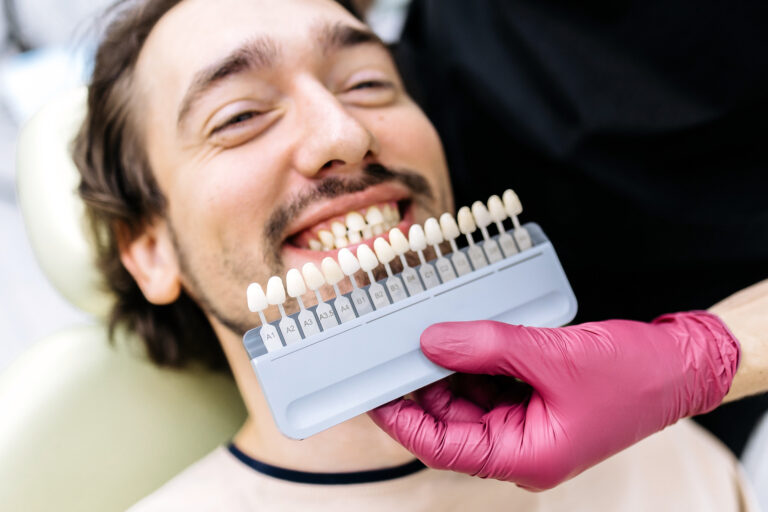
How do tooth color and shape influence the perception of a smile’s authenticity? Tooth aesthetics play a critical role in how genuine a smile appears. Natural teeth exhibit subtle variations in color, translucency, and shape, which contribute to a believable look. Overly bright or uniformly white teeth often seem artificial due to color psychology, as excessively white shades are commonly associated with cosmetic enhancements rather than natural dentition. Similarly, tooth shape affects perception; teeth that are perfectly symmetrical or overly uniform can appear unnatural, while slight irregularities and varied contours suggest authenticity. Dental professionals carefully assess these factors to create smiles that harmonize with an individual’s facial features, ensuring that the resulting appearance avoids the artificial impression often linked to unrealistic tooth color and shape.
Advances in Dental Materials for Realistic Results
Recent innovations in dental materials have considerably improved the authenticity of cosmetic restorations. Natural-looking composite resins now mimic the translucency and shading of real enamel, while enhanced porcelain veneers offer refined surface textures that closely replicate natural teeth. These advancements contribute to smiles that appear more genuine and less artificial.
Natural-Looking Composite Resins
Advancements in composite resin technology have greatly enhanced the ability of dental professionals to create restorations that closely mimic the natural appearance of teeth. Modern composite resins exhibit improved natural translucency, allowing light to pass through similarly to natural enamel. This quality prevents restorations from appearing overly opaque or artificial. Additionally, sophisticated shade matching systems enable precise color replication tailored to each patient’s unique dental characteristics. These innovations contribute to seamless integration of restorations with surrounding teeth, reducing the risk of a “fake” look. Moreover, improved handling properties allow dentists to sculpt composites with fine detail, enhancing anatomical accuracy. Together, these advancements guarantee that composite resin restorations provide durable, aesthetically pleasing results that harmonize with the natural smile, supporting both function and visual authenticity.
Enhanced Porcelain Veneer Textures
While composite resins have made significant strides in mimicking natural teeth, the refinement of porcelain veneer textures has also played an essential role in achieving realistic dental restorations. Advances in dental materials have enabled the creation of enhanced textures on porcelain veneers, closely replicating the micro-anatomy of natural tooth surfaces, including subtle ridges and translucencies. These improvements contribute not only to aesthetic authenticity but also to porcelain durability, ensuring that veneers maintain their appearance and function over time. Enhanced textures reduce the chance of a “fake” look by interacting naturally with light, creating depth and lifelike reflections. Together, these advances allow dentists to provide patients with smiles that blend seamlessly with their natural dentition, combining durability with superior visual appeal.
Digital Smile Design and Customized Treatments
Although achieving a natural and authentic smile has long been a challenge in cosmetic dentistry, Digital Smile Design (DSD) has revolutionized the process by enabling highly personalized treatment plans. By integrating digital aesthetics with advanced imaging technologies, DSD allows clinicians to visualize and simulate smile outcomes tailored to each patient’s unique facial features and dental anatomy. This personalized design approach enhances communication between dentist and patient, ensuring realistic expectations and greater satisfaction. Customized treatments derived from DSD optimize the balance of tooth shape, size, and alignment, avoiding artificial or exaggerated appearances. Consequently, modern dentistry leverages these digital tools to create harmonious, natural-looking smiles that respect individual characteristics, minimizing the risk of a “fake” smile impression.
Minimally Invasive Procedures to Enhance Smile Naturalness
Because preserving natural tooth structure is essential for achieving authentic smile aesthetics, minimally invasive procedures have gained prominence in cosmetic dentistry. These approaches prioritize conservative treatment modalities, guided by thorough smile evaluation and individualized aesthetic considerations. Techniques such as enamel microabrasion, tooth whitening, and direct composite bonding allow subtle enhancements while maintaining integrity. By limiting tooth reduction and avoiding aggressive restorations, clinicians enhance natural translucency and texture, key factors in preventing an artificial appearance. Additionally, digital tools facilitate precise planning, ensuring that interventions align with the patient’s unique dental anatomy and smile goals. This careful balance between improvement and preservation is vital for producing smiles that appear both healthy and genuine, reflecting modern dentistry’s commitment to subtlety and patient-centered care.
The Importance of Facial Harmony in Smile Aesthetics
When evaluating smile aesthetics, facial harmony plays an essential role in determining overall attractiveness and naturalness. Facial symmetry is a critical component, as balanced proportions between facial features contribute to a genuine and pleasing smile. Discrepancies in symmetry can cause a smile to appear artificial or forced, detracting from emotional expression. Modern dentistry emphasizes aligning dental work with the patient’s unique facial structure, guaranteeing that tooth shape, size, and positioning complement natural contours. This holistic approach supports authentic emotional expression by preserving the dynamic relationship between lips, teeth, and surrounding musculature. Ultimately, achieving facial harmony guarantees that smiles not only look aesthetically pleasing but also convey sincerity, preventing the perception of a “fake” smile.
Frequently Asked Questions
How Long Does a Typical Smile Makeover Take?
The typical smile makeover timeline varies, generally spanning several weeks to a few months depending on treatment complexity. Treatment duration includes consultation, preparation, procedures, and healing, ensuring natural, lasting results tailored to individual dental needs.
Are Cosmetic Dental Treatments Covered by Insurance?
Cosmetic procedures are typically not covered by insurance, as they are considered elective rather than medically necessary. Patients often pay out-of-pocket, though some plans may offer limited coverage for specific treatments linked to functional issues.
Can Teeth Whitening Cause Sensitivity or Damage?
Teeth whitening can cause temporary tooth sensitivity due to enamel dehydration or exposure of dentin. Modern techniques minimize damage by using controlled peroxide concentrations and professional supervision, ensuring safety while effectively enhancing smile brightness.
How Often Should I Visit the Dentist to Maintain a Natural Smile?
Dental professionals recommend visiting the dentist every six months for ideal dental hygiene and smile maintenance. Regular check-ups prevent issues, promote oral health, and guarantee a natural, healthy smile through timely cleanings and professional evaluations.
What Are the Costs Associated With Digital Smile Design?
Digital design costs vary widely, typically ranging from several hundred to a few thousand dollars, depending on complexity. Many clinics offer treatment financing options to help patients manage expenses, making advanced smile design more accessible and affordable.