
Invisalign Attachments: Why They’re Used and What to Expect
Invisalign attachments are meticulously designed composite resin elements bonded to teeth to optimize orthodontic aligner performance. Their strategic application enhances force distribution and aligner retention, facilitating complex tooth movements unattainable by aligners alone. Understanding the material composition, placement methodology, and functional role of attachments is essential for appreciating their impact on treatment efficacy and patient experience. This discussion explores these facets and addresses common concerns related to attachments’ clinical and aesthetic implications.
What Are Invisalign Attachments Made Of?
Invisalign attachments are composed primarily of a medical-grade composite resin specifically formulated for dental applications. This material is selected for its ideal balance of mechanical strength and biocompatibility, ensuring patient safety and comfort. The attachment materials must exhibit high adhesion to enamel surfaces while maintaining sufficient rigidity to withstand orthodontic forces during treatment. Attachment durability is critical, as these bonded composites endure repeated stress from aligner insertion and removal, as well as masticatory forces. The resin’s formulation includes filler particles that enhance wear resistance and minimize degradation over the treatment period. Additionally, the surface chemistry of the composite resin allows for effective bonding agents to securely adhere the attachments to teeth, ensuring consistent performance throughout the Invisalign therapy.
How Do Attachments Improve Invisalign Effectiveness?
Invisalign attachments enhance the aligners’ grip on teeth, facilitating controlled and efficient force application. This improved interface allows for more precise tooth movement, addressing complex orthodontic requirements. Consequently, attachments markedly increase the overall effectiveness of Invisalign treatment protocols.
Enhanced Aligners Grip
Although clear aligners are designed to fit snugly over teeth, their effectiveness in applying controlled forces can be limited without additional anchorage points. Invisalign attachments function as composite resin protrusions bonded to specific teeth, providing an enhanced grip that improves aligner retention and stability. This enhanced grip allows the aligners to exert more precise forces, reducing unwanted slippage during wear. The attachment benefits include improved force distribution and increased friction between the aligner and tooth surfaces, which is critical for complex tooth movements. By augmenting the aligner’s mechanical engagement with teeth, attachments facilitate more predictable orthodontic outcomes, ensuring that the planned treatment progresses as intended. To summarize, attachments serve as essential auxiliaries that optimize aligner efficacy through enhanced grip.
Precise Tooth Movement
Multiple types of tooth movements, such as rotation, extrusion, and intrusion, require controlled application of forces that exceed what aligners alone can reliably deliver. Invisalign attachments serve as biomechanical anchors, enabling precise force vectors to be applied directly to targeted teeth. By augmenting aligner grip and contact surface, attachments enhance movement precision, facilitating complex adjustments necessary for ideal tooth alignment. Their strategic placement is determined through digital treatment planning, ensuring that forces are distributed efficiently and predictably. This controlled force application minimizes unintended tooth movements and improves overall treatment efficacy. Consequently, attachments are integral components in achieving nuanced tooth positioning, expanding the clinical scope of aligner therapy beyond simple tipping or tipping movements to include three-dimensional, controlled tooth translation and rotation.
Types of Movements Supported by Attachments
Attachments facilitate a range of orthodontic tooth movements by providing additional grip and force application points on the teeth. Specifically, they enable effective control over rotation movements, which involve turning a tooth around its long axis to correct alignment. Attachments also assist with vertical movements, such as intrusions and extrusions, by allowing precise application of forces to adjust the tooth’s position along the occlusal plane. Furthermore, these auxiliaries support tipping and bodily translation, enhancing the aligner’s ability to execute complex biomechanical actions. By improving aligner retention and force distribution, attachments guarantee predictable and efficient correction of malocclusions that would be challenging to accomplish with aligners alone. Their design and placement are tailored to the desired tooth movement, optimizing treatment outcomes.
The Attachment Placement Process Explained
The attachment placement process involves precise positioning on specific tooth surfaces to optimize orthodontic force application. Selection of appropriate composite materials and attachment designs is critical to guarantee durability and patient comfort. The procedure is typically brief, with minimal discomfort reported during and after placement.
Attachment Positioning Steps
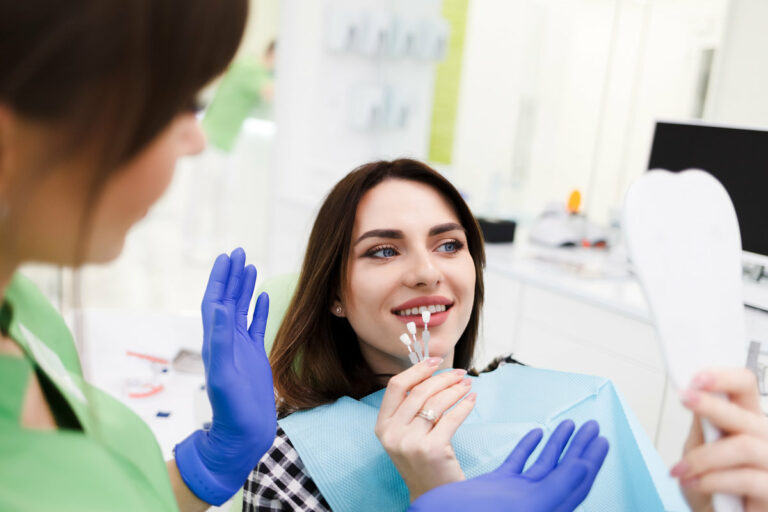
Accurate placement of Invisalign attachments is critical to guarantee ideal force application and effective tooth movement. The process begins with a thorough assessment of the attachment location on each tooth, guided by digital treatment planning software. This software determines precise attachment alignment to optimize biomechanical forces during aligner wear. Once approved, the clinician isolates the tooth surface and applies a bonding agent. A custom attachment template, fabricated to match the predetermined positions, is then seated onto the teeth, ensuring exact placement. Composite resin is injected into the template’s reservoirs, and light-cured to secure the attachments firmly in place. The final step involves the removal of the template and verification of attachment integrity and positioning. Each step emphasizes precision to maintain the planned orthodontic outcomes.
Material and Design Choices
Selection of appropriate materials and design configurations directly influences the performance and durability of Invisalign attachments. The design options for attachments vary in shape and size, tailored to optimize force application and tooth movement efficiency. Commonly, composite resin materials are utilized due to their adhesion strength, biocompatibility, and ease of manipulation. These material benefits guarantee secure bonding to enamel while minimizing patient discomfort. Additionally, the resin’s translucency supports aesthetic considerations. Advanced design options include beveled and ellipsoid shapes, engineered to enhance specific orthodontic mechanics. The choice of material and design is critical in balancing mechanical effectiveness with patient compliance, ultimately contributing to predictable treatment outcomes. Precision in these selection criteria underpins the success of the attachment placement process within Invisalign therapy.
Procedure Duration and Sensations
Attachment placement during Invisalign treatment typically requires a brief clinical session, often lasting between 15 to 30 minutes. During this procedure, the clinician isolates the tooth surface, applies an etching agent, and uses a bonding resin to securely affix the composite attachment. The process is minimally invasive and integrated efficiently within the overall treatment timeline. Patients may experience mild pressure or slight discomfort during attachment placement, but significant pain is uncommon. Expected sensations post-procedure include brief tooth sensitivity or minor irritation, which generally subside within hours to a few days. These attachments remain fixed until the completion of the treatment, aiding aligner efficacy. Understanding the procedure duration and expected sensations assists patients in anticipating this vital step in the Invisalign orthodontic process.
Caring for Your Attachments During Treatment
Although Invisalign attachments are designed to be durable, maintaining their integrity throughout treatment requires careful hygiene and mindful behavior. Effective cleaning techniques are essential to prevent plaque accumulation around attachments, which can compromise their adhesion and oral health. Patients should employ a soft-bristled toothbrush and interdental brushes to meticulously clean around the attachments, ensuring no debris remains. Avoiding abrasive toothpaste and harsh scrubbing preserves the resin’s surface. Attachment maintenance also involves minimizing behaviors that exert excessive force, such as chewing hard or sticky foods, which can dislodge or fracture the attachments. Regular dental check-ups enable professionals to assess attachment condition and perform necessary repairs. Adherence to these protocols optimizes treatment outcomes and mitigates risks associated with attachment failure.
Potential Discomfort and How to Manage It
While Invisalign attachments are generally well-tolerated, patients may experience varying degrees of discomfort during treatment. This discomfort typically arises from the initial placement of attachments and the subsequent pressure exerted by aligners to achieve tooth movement. Managing discomfort involves maintaining proper oral hygiene to prevent inflammation and using over-the-counter pain relief medications such as ibuprofen or acetaminophen when necessary. Additionally, applying orthodontic wax on attachments can reduce irritation to adjacent soft tissues. It is essential to monitor discomfort levels; persistent or severe pain should prompt consultation with an orthodontic specialist. Proper patient education on expected sensations and effective managing discomfort strategies contributes to improved compliance and treatment outcomes, ensuring that pain relief measures are appropriately employed without compromising the orthodontic process.
How Attachments Affect the Appearance of Your Smile
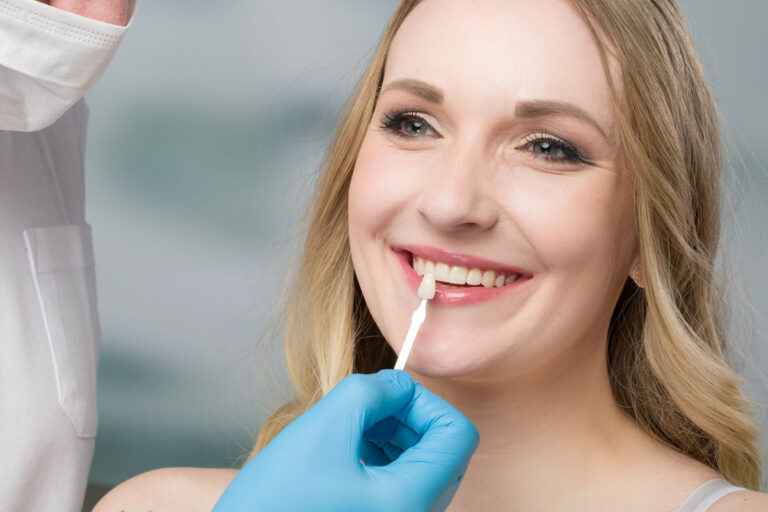
Because Invisalign attachments are bonded directly to the teeth, they introduce subtle changes to the smile’s visual aesthetics. Attachment visibility varies depending on their size, shape, and location, potentially affecting smile aesthetics during treatment. Although designed to be discreet, attachments may reflect light differently than natural enamel, making them perceptible upon close observation. Their presence is typically more noticeable on anterior teeth due to higher visibility in social interactions.
- Attachments are tooth-colored but may slightly contrast with natural enamel tones
- Placement on visible teeth increases attachment visibility
- Their geometric shape alters surface texture, impacting light reflection
- Smile aesthetics are temporarily modified but usually considered acceptable for treatment duration
When and Why Attachments Might Be Removed Early
Attachments, despite their discreet design, may occasionally require early removal due to clinical or patient-specific factors. Early removal typically occurs when attachments interfere with oral hygiene, cause soft tissue irritation, or fail to maintain adequate retention. Additionally, unforeseen changes in tooth movement or treatment progression might necessitate treatment adjustments, prompting the removal and repositioning of attachments to optimize aligner efficacy. In some cases, attachments can be removed early if the targeted tooth movement has been achieved ahead of schedule, reducing unnecessary appliance components. The decision for early removal is made by the orthodontic provider based on periodic evaluations and treatment response. This guarantees that the aligner system continues to function effectively while maintaining patient comfort and oral health throughout the treatment course.
Frequently Asked Questions
Can Invisalign Attachments Cause Allergies or Skin Reactions?
Allergic reactions and skin irritation from Invisalign attachments are rare but possible due to adhesive components or material sensitivity. Proper dental evaluation and hypoallergenic alternatives mitigate risks, ensuring patient safety and minimizing adverse dermatological effects.
How Long Do Attachments Typically Stay on During Treatment?
Attachment duration typically aligns with the entire treatment timeline, often ranging from several months to over a year, depending on individual orthodontic needs and treatment complexity, ensuring ideal tooth movement and aligner retention throughout.
Are There Any Foods I Should Avoid With Attachments?
Patients should avoid hard, sticky, or chewy foods to prevent attachment damage. Proper attachment maintenance requires adapting eating habits to minimize stress on attachments, ensuring their longevity and effectiveness throughout orthodontic treatment.
Can I Whiten My Teeth With Attachments in Place?
Whitening options can be used cautiously with attachments in place; however, attachment care must be prioritized to prevent damage or discoloration. Consult a dental professional to select compatible whitening methods that maintain attachment integrity throughout treatment.
Will Attachments Affect My Speech or Pronunciation?
Attachments may cause a temporary speech adjustment as the oral environment adapts. Pronunciation changes are typically minor and transient, resolving within days to weeks without intervention, reflecting normal acclimatization to altered lingual and labial surfaces.