
Can Restorative Dentistry Improve Speech Issues?
Restorative dentistry addresses structural problems in the oral cavity that can interfere with speech production. Missing, misaligned, or damaged teeth often disrupt tongue placement and airflow, resulting in articulation difficulties. By correcting these dental issues through targeted procedures, speech clarity may improve. Understanding the specific ways various treatments influence phonetics is essential for patients experiencing communication challenges and seeking effective solutions.
How Dental Health Affects Speech
Dental health plays a critical role in the production and clarity of speech. Proper dental hygiene and maintenance of oral health guarantee the structural integrity of teeth, gums, and supporting tissues, which are essential for articulating distinct phonemes. The alignment and condition of teeth influence tongue placement and airflow, directly impacting sound formation. Compromised oral health, such as tooth loss or periodontal disease, can disrupt these mechanisms, leading to altered speech patterns. Maintaining ideal dental hygiene reduces the risk of infections and structural damage that may impair speech function. Consequently, consistent dental care supports not only overall oral health but also contributes to clear and effective verbal communication, underscoring the importance of integrating dental hygiene practices into patient care plans focused on speech preservation.
Common Speech Problems Linked to Dental Issues
Misaligned teeth can disrupt proper tongue placement, leading to articulation difficulties and compromised speech clarity. Similarly, missing teeth often alter airflow and resonance, affecting phoneme production. Addressing these dental irregularities is essential for restoring ideal speech function.
Impact of Misaligned Teeth
Occlusal discrepancies frequently contribute to articulation difficulties by altering tongue placement and airflow during speech production. Misaligned bites and crooked teeth disrupt normal oral cavity dynamics, leading to impaired phoneme formation. These dental irregularities can cause lisps, distorted sibilants, and difficulty pronouncing alveolar and labiodental sounds, as the tongue cannot achieve ideal contact with dental structures. In addition, malocclusion may increase compensatory muscle tension, exacerbating speech inefficiency and fatigue. Restorative dentistry aims to correct these structural anomalies, improving dental alignment and occlusal relationships. By addressing misaligned bites and crooked teeth, patients often experience enhanced speech clarity and reduced articulation errors. Precise evaluation and customized treatment plans are essential to enhance both functional and aesthetic outcomes, ultimately improving communication and quality of life.
Effects of Missing Teeth
When teeth are missing, the oral cavity undergoes significant functional alterations that can hinder proper speech production. Tooth loss disrupts the normal contact points between teeth and the tongue, impairing articulation of phonemes such as “s,” “th,” and “f.” This functional impairment often results in lisps, slurred speech, or difficulty pronouncing certain consonants. Additionally, missing anterior teeth compromise lip support and airflow control, further affecting speech clarity. The extent of speech disturbance correlates with the number and location of missing teeth, emphasizing the critical role of dental integrity in phonetic accuracy. Restorative dentistry aims to mitigate these deficits by restoring occlusal and structural support, thereby improving speech function and overall oral competency in affected patients.
Types of Restorative Dentistry Procedures
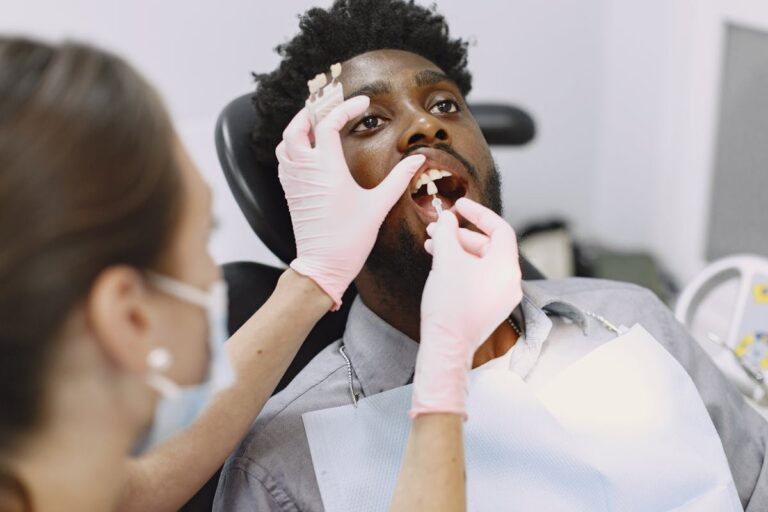
Restorative dentistry encompasses various procedures such as crowns, bridges, dentures, and implants designed to repair or replace damaged teeth. These treatments aim not only to restore oral function but also to improve speech clarity by addressing structural deficiencies. Understanding the specific procedures and their speech-related benefits is essential for optimizing patient outcomes.
Common Restorative Procedures
Frequently employed in dental practice, common restorative procedures address a range of structural and functional impairments affecting teeth and oral tissues. These procedures include dental fillings, crowns, bridges, and implants, each utilizing advanced restorative materials designed for durability and biocompatibility. Fillings repair minor to moderate carious lesions, restoring tooth integrity with composite resins or amalgams. Crowns provide full coverage for extensively damaged teeth, enhancing strength and function. Bridges replace one or more missing teeth, anchored to adjacent teeth or implants, restoring occlusion and aesthetics. Implants offer a fixed solution for tooth loss, integrating with bone to support prosthetic crowns. Throughout these treatments, patient comfort is prioritized through minimally invasive techniques and effective anesthesia, ensuring best outcomes and functional restoration.
Speech Benefits From Treatments
Although primarily aimed at restoring dental function and aesthetics, various types of restorative dentistry procedures also contribute greatly to the improvement of speech articulation and clarity. Treatment options such as dental crowns, bridges, implants, and dentures are designed to reestablish proper occlusion and tooth positioning, which directly influence phonetic accuracy. For instance, well-fitted dentures restore tongue space and lip support, enhancing speech clarity by preventing lisps or slurred sounds. Similarly, implant-supported restorations provide stability, allowing patients to articulate sounds more effectively compared to removable prostheses. Orthodontic interventions combined with restorative treatments can correct malocclusions that impair speech production. Selecting appropriate treatment options tailored to individual anatomical and functional needs is critical to achieving ideal speech outcomes alongside dental rehabilitation. Consequently, restorative dentistry plays an integral role in addressing speech disorders related to dental deficiencies.
Impact of Crowns and Bridges on Speech
How do dental crowns and bridges influence speech articulation? Dental crowns restore damaged teeth, improving occlusion and tongue placement, which are critical for clear phoneme production. The crowns benefits include enhanced tooth stability and natural contour replication, aiding precise airflow during speech. Similarly, bridges replace missing teeth, restoring dental arch continuity and maintaining proper spacing. Bridges advantages involve preventing adjacent tooth drift and optimizing contact points, facilitating accurate enunciation. Both restorations can initially alter speech due to changes in oral proprioception but typically result in improved articulation once adaptation occurs. Properly designed crowns and bridges support the biomechanics of speech by maintaining oral structures essential for sound modulation, ultimately contributing to enhanced verbal communication for patients with compromised dentition.
Role of Dentures in Enhancing Speech Clarity
In what ways do dentures contribute to the enhancement of speech clarity? Dentures play a vital role in restoring oral function by replacing missing teeth, which directly affects phonetics. Various dentures types—complete, partial, and implant-supported—are designed to replicate natural dentition, aiding proper tongue placement and airflow during speech.
Key factors include: 1. Denture Fit and Stability: Well-fitted dentures minimize movement, preventing speech distortion. 2. Material and Design: Materials that mimic natural teeth and gums support clear articulation. 3. Denture Maintenance: Regular cleaning and adjustments guarantee peak performance and comfort, essential for consistent speech clarity.
Proper selection and maintenance of dentures are fundamental for patients seeking to improve speech, highlighting restorative dentistry’s role in functional rehabilitation.
Orthodontic Treatments and Speech Improvement
When dental misalignments disrupt normal oral mechanics, orthodontic treatments offer targeted solutions to enhance speech function. By correcting malocclusions and achieving ideal orthodontic alignment, these interventions improve tongue placement and airflow during phonation. Precise repositioning of teeth facilitates clearer articulation of consonants and vowels, addressing speech impediments linked to structural irregularities. While orthodontic treatment addresses anatomical factors, integration with speech therapy guarantees thorough management of residual functional speech issues. Speech therapy complements orthodontic care by refining motor skills and compensatory patterns developed prior to alignment correction. Collaboration between restorative dentists, orthodontists, and speech-language pathologists maximizes outcomes, tailoring interventions to individual patient needs. Therefore, orthodontic treatments act as a foundational step in improving speech clarity, particularly when combined with adjunctive rehabilitative strategies.
Patient Experiences: Speech Changes After Treatment
Although outcomes vary depending on individual anatomical and functional factors, patients frequently report perceptible changes in speech following restorative dental treatments. Patient testimonials often highlight improvements in articulation clarity and phonetic precision. Objective speech assessments corroborate these subjective experiences, quantifying alterations in speech patterns post-treatment. Key observations include:
- Enhanced tongue placement and mobility due to structural restoration.
- Reduction in lisps and distortions associated with missing or damaged teeth.
- Improved oral resonance and airflow control contributing to clearer phoneme production.
These findings underscore the importance of integrating speech evaluation in restorative dental protocols. Extensive patient feedback combined with formal speech assessments provides valuable insights into functional outcomes, guiding clinicians in optimizing treatment plans focused on both dental restoration and speech function enhancement.
When to Seek Professional Advice for Speech Concerns
Under what circumstances should patients consider consulting a specialist regarding speech difficulties related to restorative dental treatments? Patients experiencing persistent speech impediments, such as articulation errors or phonetic distortions lasting beyond two weeks post-treatment, should seek professional consultation. Additionally, new-onset speech abnormalities that coincide with recent dental restorations warrant prompt speech evaluation. Complex cases involving multiple restorations or prostheses may benefit from interdisciplinary assessment, including dental specialists and speech-language pathologists. Early professional consultation facilitates accurate diagnosis, enabling tailored interventions that address underlying functional impairments. Delayed evaluation risks prolonged communication challenges and diminished quality of life. As a result, patients are advised to monitor speech changes closely and pursue timely speech evaluation when abnormalities persist or worsen, ensuring ideal outcomes in restorative dentistry and speech function.
Frequently Asked Questions
Can Restorative Dentistry Prevent Future Speech Problems?
Restorative dentistry can prevent future speech problems by maintaining ideal oral health and structural integrity, thereby supporting speech clarity. Early intervention guarantees functional alignment, reducing risks of deterioration that may impair articulation over time.
How Long Does Speech Improvement Take After Dental Treatment?
Speech clarity improvement typically begins within days to weeks post-treatment, though treatment duration and individual adaptation vary. Continuous monitoring guarantees ideal outcomes, with some patients requiring speech therapy to fully adjust to dental restorations.
Are There Speech Therapy Options Combined With Restorative Dentistry?
Speech therapy options combined with restorative dentistry exist, emphasizing dental collaboration to optimize outcomes. This interdisciplinary approach addresses functional deficits, enhancing articulation and phonetics, thereby improving patient communication efficiency and overall quality of life through tailored rehabilitation protocols.
Does Age Affect Speech Improvement From Dental Procedures?
Age-related factors influence speech improvement following dental procedures, as younger patients closer to developmental milestones exhibit greater neuroplasticity and adaptability. Conversely, older individuals may experience slower or limited speech gains due to reduced physiological responsiveness.
Can Dental Materials Used Affect Speech Differently?
Dental materials can influence speech clarity due to their texture, weight, and fit. Ideal selection and customization enhance articulation, minimizing phonetic disturbances, thereby improving patient outcomes in restorative dentistry focused on functional speech restoration.